Dosing 101: 18g vs 20g Baskets – Which One to Use?
Compare 18g vs 20g espresso baskets. Learn about dose differences, headspace, extraction impact, and which basket suits your Breville machine.
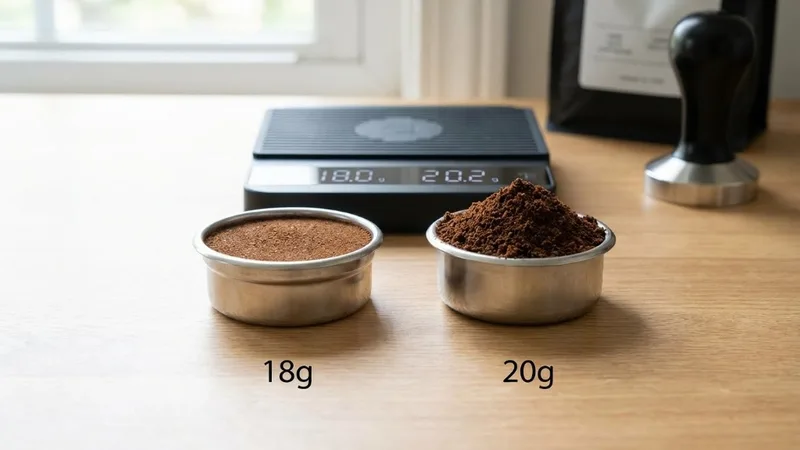
Upgraded my filter basket and immediately got confused by all the sizing options. 18g, 20g, 22g—what do these numbers actually mean, and does it matter for my Barista Express?
Turns out it matters quite a bit. The wrong basket size leads to headspace problems that mess up extraction. Here’s what I’ve learned comparing different baskets.
Understanding Espresso Basket Sizing
What Do the Numbers Mean?
An “18g basket” is designed to hold 18 grams of ground coffee optimally. Doesn’t mean you can’t use 17g or 19g—but 18g gives you the ideal headspace between coffee puck and shower screen.
The ±1g Rule
Golden rule: Dose within ±1g of your basket’s rated capacity.
| Basket Size | Optimal Dose Range |
|---|---|
| 18g | 17-19g |
| 20g | 19-21g |
| 22g | 21-23g |
Going outside this range causes problems: too little coffee creates excessive headspace (poor extraction), too much leaves no headspace (puck smashes against shower screen).
18g vs 20g: Key Differences
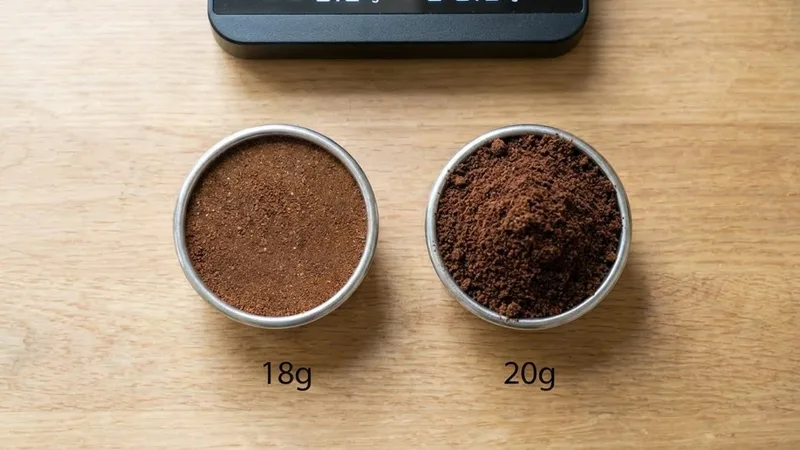
Extraction Characteristics
| Factor | 18g Basket | 20g Basket |
|---|---|---|
| Hole count | Fewer holes | More holes |
| Flow resistance | Higher | Lower (more even) |
| Grind required | Finer | Slightly coarser |
| Forgiveness | Less forgiving | More forgiving |
| Typical output | ~36g | ~40g |
Flavor Profiles
18g Basket: Often produces more concentrated shots with pronounced acidity and clarity. Higher resistance creates more pressure against the puck.
20g Basket: Tends toward fuller body and sweetness. Additional holes allow more even flow distribution, which reduces channeling.
When to Choose Each Basket
Choose 18g When:
- You prefer smaller, concentrated shots
- Your grinder produces fine, consistent particles (reduces channeling risk)
- You drink straight espresso (not milk drinks)
- You use light roasts that benefit from higher extraction
- You want classic ristretto-style shots
Choose 20g When:
- You prefer larger shots (40g+ output)
- You make primarily milk drinks (bigger dose punches through milk)
- You use dark roasts that extract easily
- You want more forgiving extraction (better for learning)
- You’re upgrading from stock Breville baskets
Basket Types: VST vs IMS vs Stock
Stock Breville Baskets
The included baskets are functional but imprecise. Hole sizes vary, leading to uneven extraction. Fine for learning, but worth upgrading eventually.
VST Precision Baskets
Pros:
- Laser-cut holes for exact sizing
- Extremely consistent extraction
- Industry standard for professionals
Cons:
- Less forgiving of grind inconsistencies
- Require good distribution technique
- Premium price ($35-50)
IMS Precision Baskets
Pros:
- Similar precision to VST
- Often slightly more forgiving
- Good range of sizes
Cons:
- Can be harder to find
- Similar price to VST
I switched to an IMS 18g basket about six months in and immediately noticed more consistent shots.
Headspace: Why It Matters
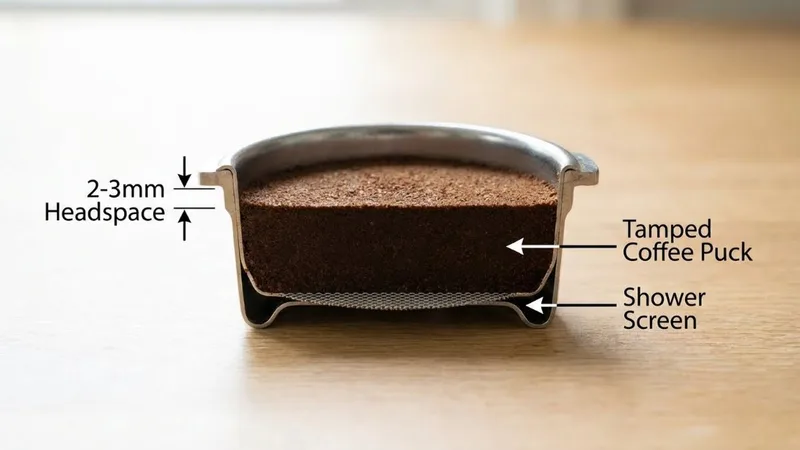
Headspace is the gap between tamped coffee puck and shower screen. It affects:
- Water distribution: Proper space lets water spread evenly before hitting puck
- Extraction evenness: No headspace = puck touches screen = channeling
- Cleaning: Stuck pucks are a nightmare to knock out
Checking Your Headspace
After tamping, insert portafilter without locking in. Remove it and check:
- Good: Slight impression from screen, even marks
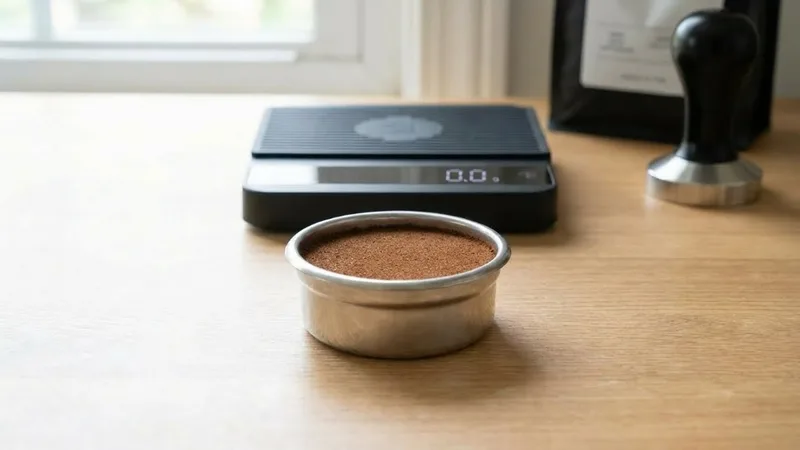
- Too little: Deep grooves, coffee sticking to screen
- Too much: No marks at all, puck may be too loose
The razor tool that came with your Breville helps achieve consistent headspace by trimming excess grounds.
Practical Recommendations
For Breville Barista Express Owners
Start with: The included 2-cup single wall basket (rated for ~18g)
Recommended upgrade: 18g VST or IMS basket
Why not 20g? The Breville’s 54mm portafilter limits basket depth. A 20g basket may have inadequate headspace in some shots.
For Different Drinks
| Drink | Recommended Basket | Dose | Yield |
|---|---|---|---|
| Espresso | 18g | 18g | 36g |
| Americano | 18g | 18g | 36g |
| Latte | 18g or 20g | 18-20g | 36-40g |
| Cappuccino | 18g | 18g | 36g |
Common Dosing Mistakes
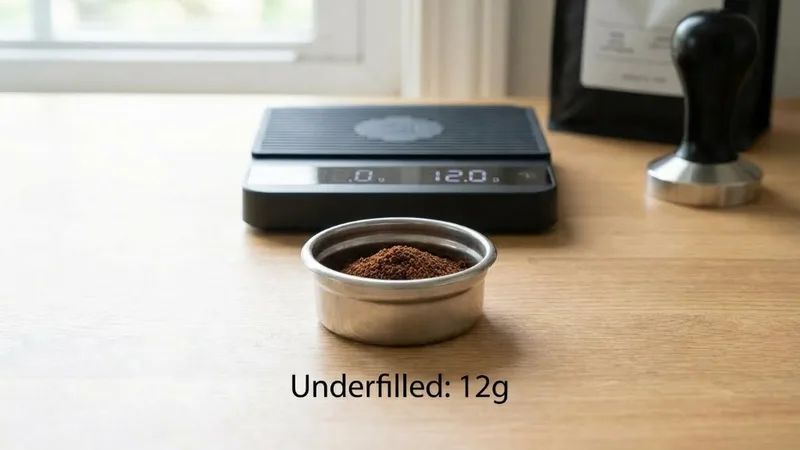
Under-Dosing
Signs: Fast extraction, sour taste, watery texture
Fix: Increase dose or use smaller basket
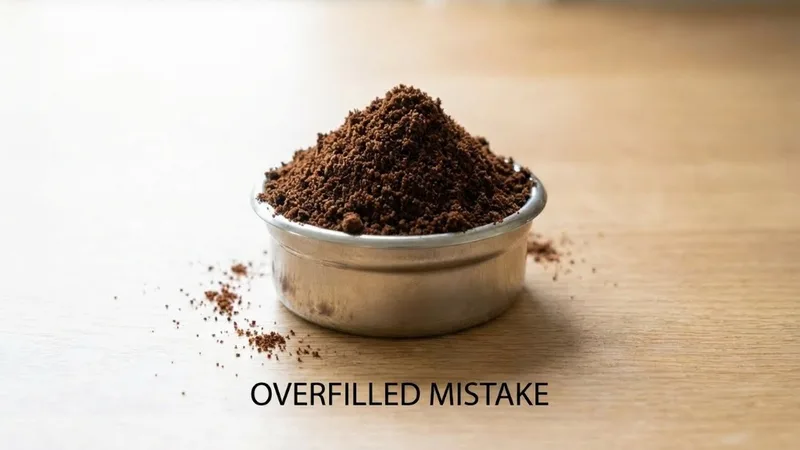
Over-Dosing
Signs: Slow/choking extraction, bitter taste, puck touching screen
Fix: Decrease dose or use larger basket
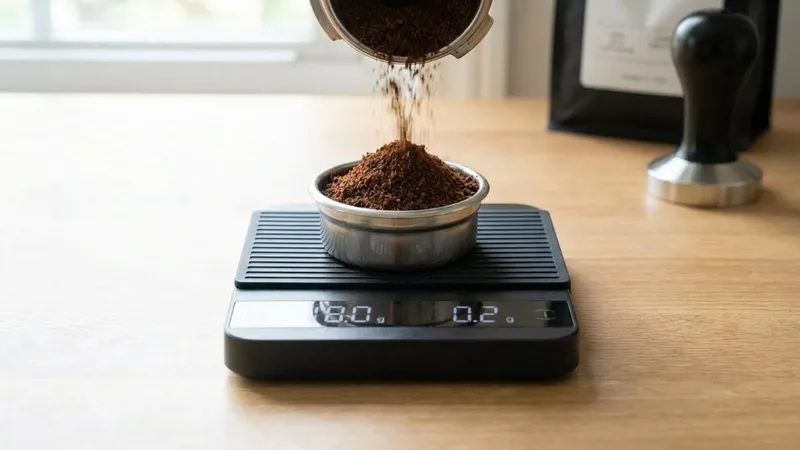
Inconsistent Dosing
Signs: Variable shot quality day-to-day
Fix: Use a scale for every single dose. Essential for espresso.
Frequently Asked Questions
What’s the ideal dose for an 18g basket?
18g ±1g. Use 17-19g for optimal headspace and extraction.
Does basket size affect taste more than dose?
They work together. Properly dosed 18g basket produces different results than under-dosed 20g basket, even at same total weight.
Are 18g and 20g baskets universal across machines?
Not entirely. Basket diameter must match your portafilter (54mm for Breville, 58mm for most commercial). Depth matters too.
Should I buy multiple basket sizes?
Eventually, yes. Having 18g for straight espresso and 20g for milk drinks offers flexibility. But master one size first before collecting baskets.
Related Guides:

Mikael
Home espresso enthusiast and Breville specialist. Helping you master the art of coffee brewing from your own kitchen.
Learn more about me →